Posted
Mon. Jul. 20/26

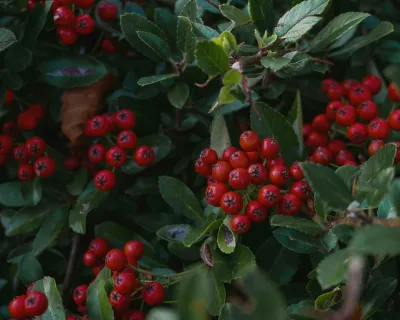
Picture this: you’re walking peacefully along a trail when a ground-hugging shrub with glistening red berries starts calling your name. Let’s be honest, we’d all be tempted.
But western Canada's trails are full of plants that could make or break your day. Knowing your local flora isn't just a trail-side party trick. It’s the difference between simple blisters from your boots and chemical burns from an innocent-looking bush.
Whether you're day-hiking the Sea to Sky corridor, backpacking through Jasper, or wandering a riverside path in the Okanagan, these are the plants every hiker in Alberta and B.C. should know:
DISCLAIMER: Before you forage or apply anything from this list, remember that plant identification can be tricky. Toxic species can closely resemble the beneficial ones described below. Never eat, brew or apply any wild plant to your skin unless you are 100% certain of its identification. When in doubt, consult a field guide, local expert or trained forager.

Cow parsnip is a tall fuzzy plant that grows along the edge of moist areas and in meadows. It’s defined by maple-leaf-like leaves (often divided into three segments), a stout fuzzy green stem, and large, umbrella-shaped clusters of white flowers.
The plant’s sap contains toxins that can cause burn-like blisters when exposed to ultraviolet (UV) light. If your skin comes into contact with the sap, get out of the sun immediately and wash with soap and water.

Poison ivy can grow either horizontally along the ground with upright leafy stalks or as a climbing vine. It’s defined by clusters of three pointed leaflets, where the middle leaflet sits on a much longer stem than the others.
Every part of the plant contains a toxic oily resin that causes an intensely itchy, red rash that often leads to swelling and fluid-filled blisters. Wash the exposed skin thoroughly with soap and cool water if you come in contact.

Stinging nettle has serrated heart-shaped leaves, tiny stinging hairs and a square hollow stem. It grows in moist soil along trails, rivers and the edges of forests.
The plant is not toxic but the needling hairs inject irritants when in contact with skin. Those cause a painful itchy rash that typically lasts a few hours. If you come in contact, let the chemicals dry on the skin without touching first and then wash the area with soap and water.
Sign up for ZenSeekers enews for local culture & outdoor adventure across Western Canada.

Old man’s beard is a grey-green lichen that drapes the branches of conifers in damp forests. It looks like something from a fairy tale but it's genuinely useful.
It has natural antibiotic properties, works as emergency fire tinder, and can be used as a wound dressing. It creates a woodsy tea when steeped in boiling water for 30 to 45 minutes.

Aspen trees can grow up to 25 metres tall with wide pointed leaves that tremble in even the slightest breeze. Look for smooth pale grey-white bark with horizontal lines and groves that share root systems.
The bark is dry and porous, making it an excellent tinder source in damp conditions. A powdery white residue found on the bark can also be used as a light layer of natural sunblock. Or grind the leaves into a pulp and apply directly onto the skin to reduce inflammation, pain or itchiness of bug bites.

Yarrow grows from 1 to 3 feet tall in meadows, roadsides and lawns. It’s got fern-like leaves along its stem and a flat top made from clusters of tiny white or pale-pink flowers.
The entire plant is edible and nutritious but it is advised not to eat too much. Crushed yarrow leaves can be used to stop bleeding, disinfect wounds and soothe bug bites.
The trails of BC and Alberta are full of surprises. Now you'll know which ones to reach for, and which ones to walk right past.
Be sure to tag us at #zenseekers if you hit the trails, to share your adventures! And sign up for the ZenSeekers newsletter for more Zen, outdoors, in Western Canada.
You know the tricks to identification, now go out and test your knowledge.